How funnel cake became an American fairground favorite
From Pennsylvania Dutch holiday tables to the Kutztown Folk Festival, trace how a regional fried batter became fair food.
The dessert predates the midway
Pennsylvania Dutch families were making versions of funnel cake before it became a festival staple. Food historian William Woys Weaver traced one Lancaster County recipe to 1916. Regional accounts associate earlier cakes with winter holidays and church bazaars, which helps explain why an old recipe can be familiar in one family and absent from another community cookbook.
Kutztown brought it into public view
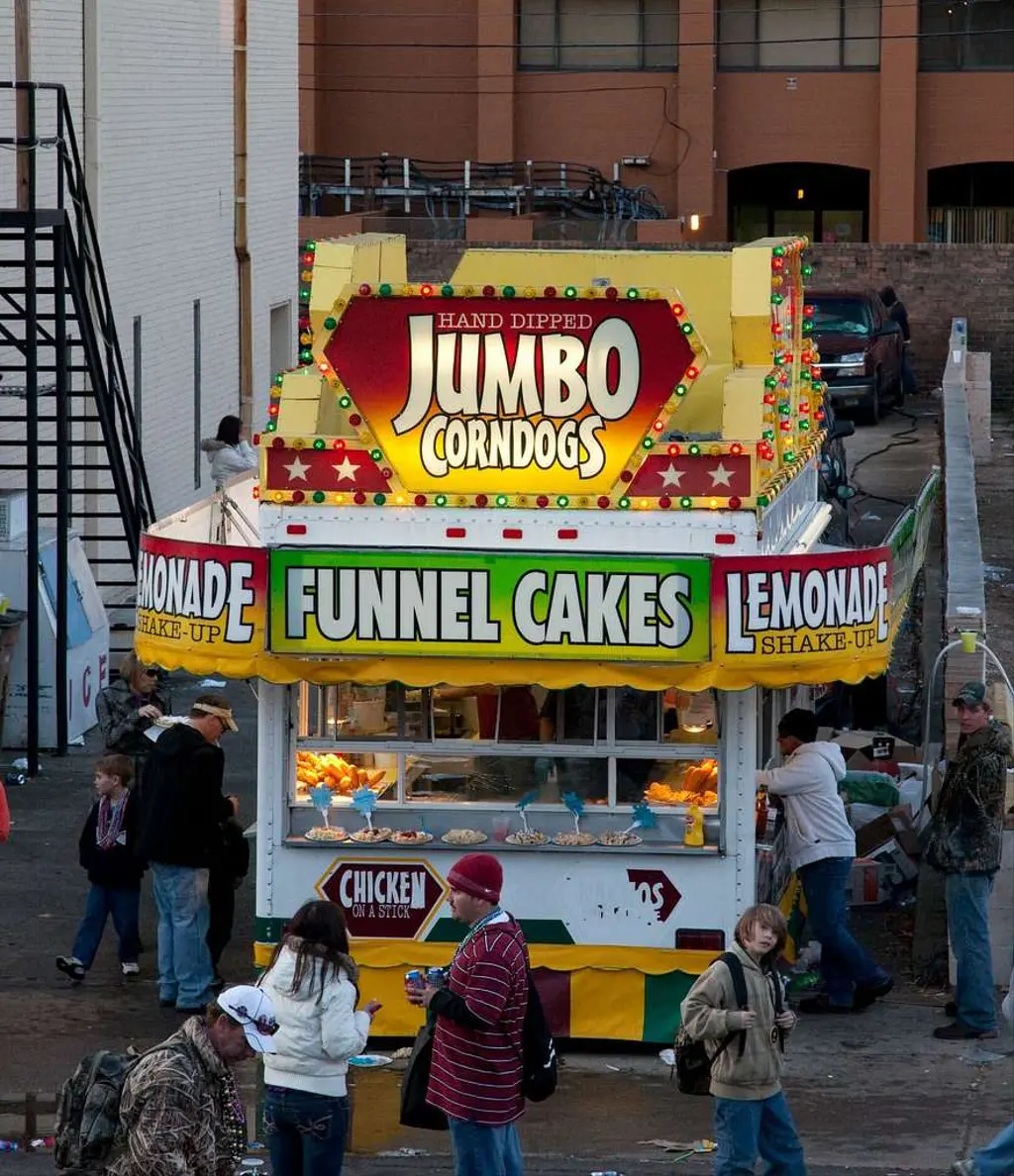
The Kutztown Folk Festival began in 1950 to share Pennsylvania Dutch traditions. Festival accounts credit Emma Miller with making funnel cakes there in the early years. A crowd could watch the batter take shape and order another cake fresh, a format that made the dessert easy to carry from a regional festival to other fairs. The festival helped popularize the cake, while its exact origin is harder to establish.
The fairground format is part of the appeal
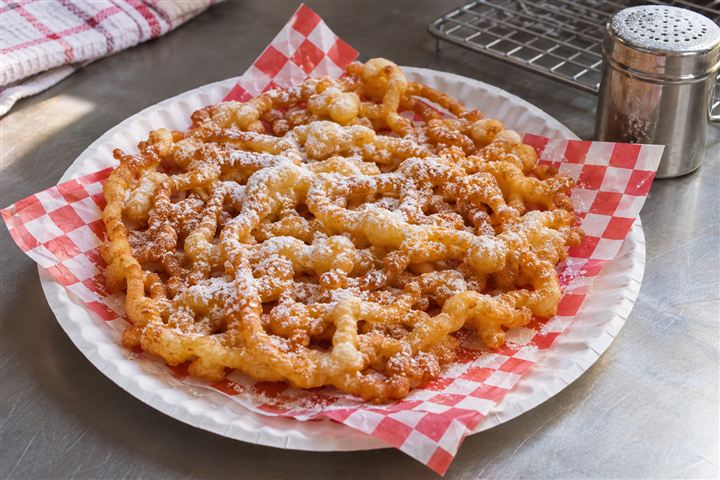
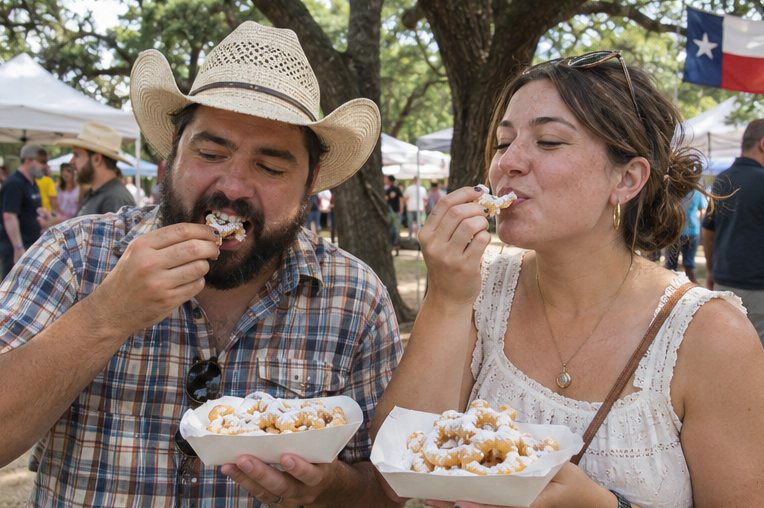
The spiral has open spaces and overlapping strands. Thin loops give you crisp edges, while the thicker intersections make a softer bite. Powdered sugar is the familiar finish, and a serving boat makes the dessert easy to share between activities. The attraction is as much the smell and the moment of service as the recipe itself.